Networking Cables
Copper cable / Ethernet
100 meters is the maximum an Ethernet cable can support without attenuation. They come in a lot of colors — not for aesthetic purposes, but as color coding that can be used to avoid confusion.
Types of Ethernet:
- >CAT 5E
- >CAT 6
Grades of Ethernet cable:
- >Plenum cable: cables made with more resistance capability because they run through plenum space.
- >Riser cable: normal Ethernet cable that we use.
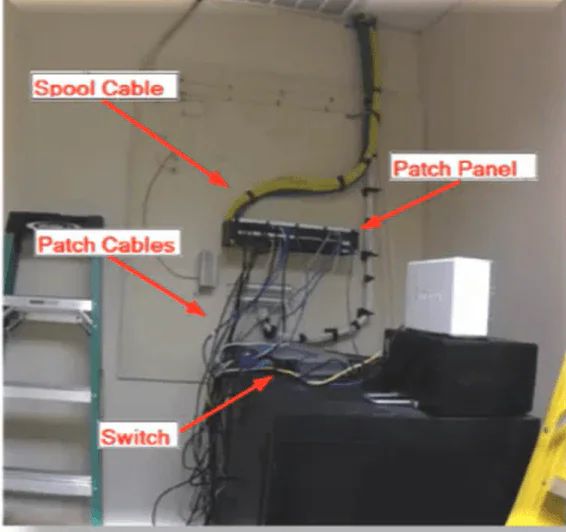
- >Spool cables are long Ethernet cables that run through the entire building through a plenum space (the ceiling area of the house).
- >Patch panel is a junction point where the end of the spool cable meets, with a lot of network jacks in the facade. This is usually used for the flexibility of the switch.
- >Patch cables are riser-grade cables that aren't used in plenum space, but through patch panels to the switch and servers.
Fiber optics cables
Fiber diameters
Core (glass) + Cladding (glass) + Buffer (plastic).
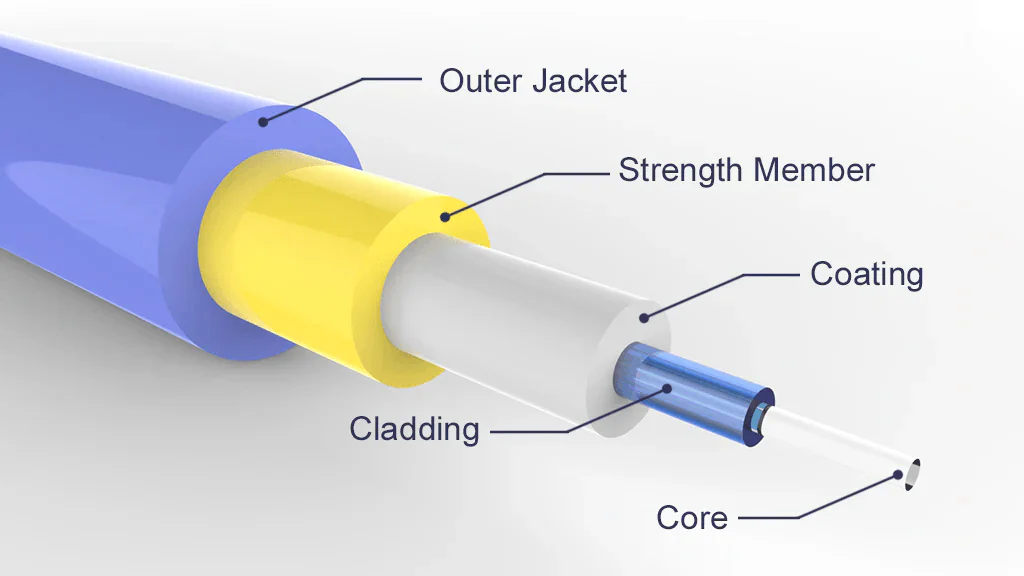
The core is where light travels; the cladding makes sure the light rays don't leave the inside of the cable. Most fiber is around 125 microns (millionth of a meter).
Types of fiber cables
| Single Mode Fiber (SMF) | Multi Mode Fiber (MMF) |
|---|---|
| Small, glass core | Thicker, plastic core |
| Long distance | Short distance |
| More expensive | Cheaper, easier to handle |
| More bandwidth | Less bandwidth |
| Yellow color | Aqua or orange colored |
| Usually 9/125 microns at the core | Usually 50/125 microns at the core |
Fiber interfaces
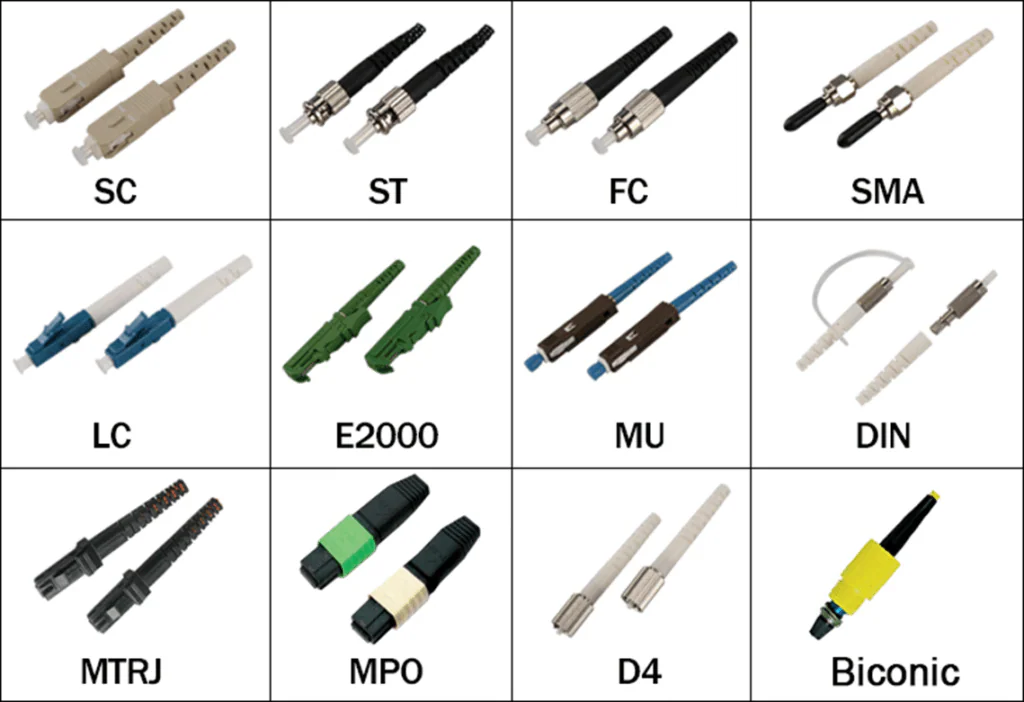
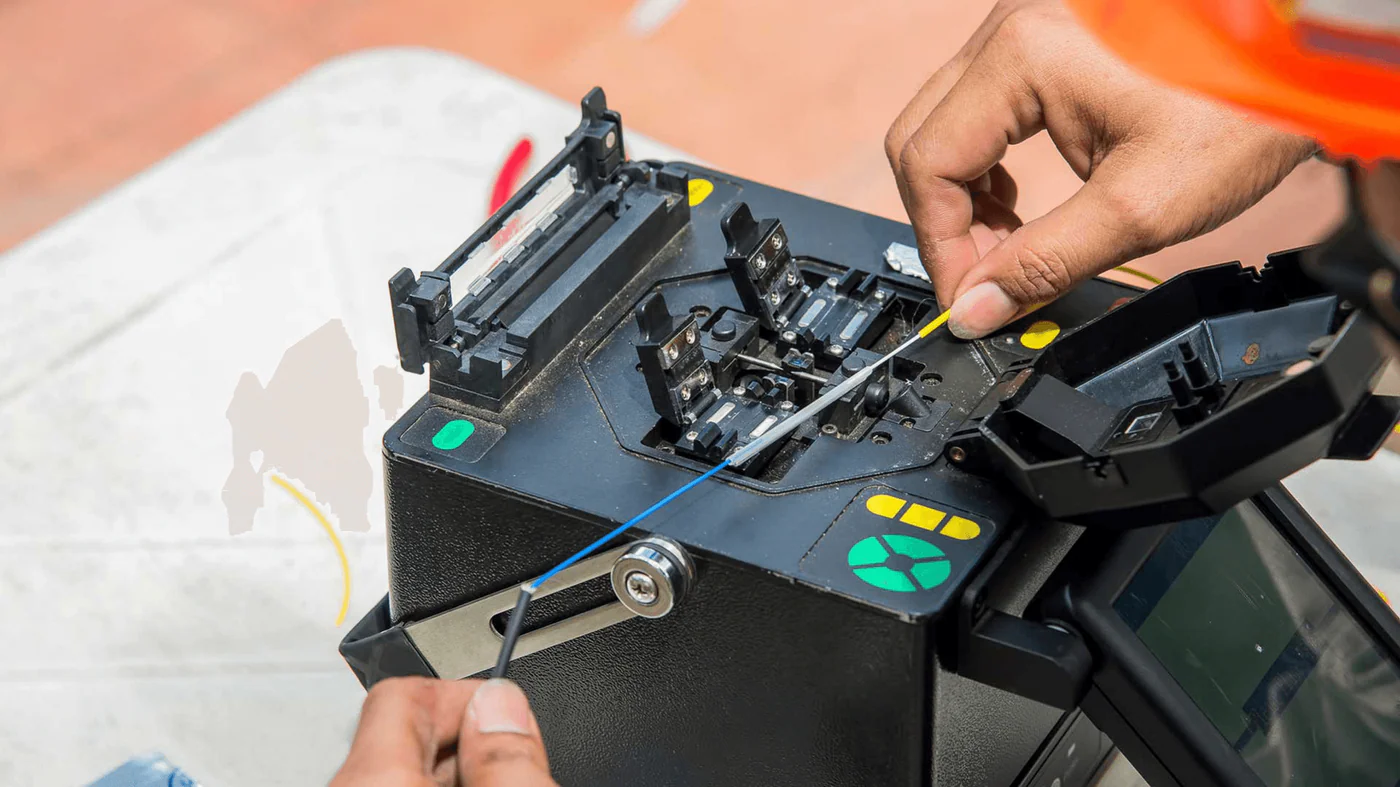
Fiber cannot perform anything except data transfer, thus the two ends — one is send and another is receive. Fiber splicing is pretty complex and requires specialized technicians.
Copper Ethernet runs about metres before attenuation. Single-mode fibre has a roughly micron core and is used over distances, while multi-mode fibre is microns and cheaper to handle.